Last Updated: October 30, 2026
Quick Summary
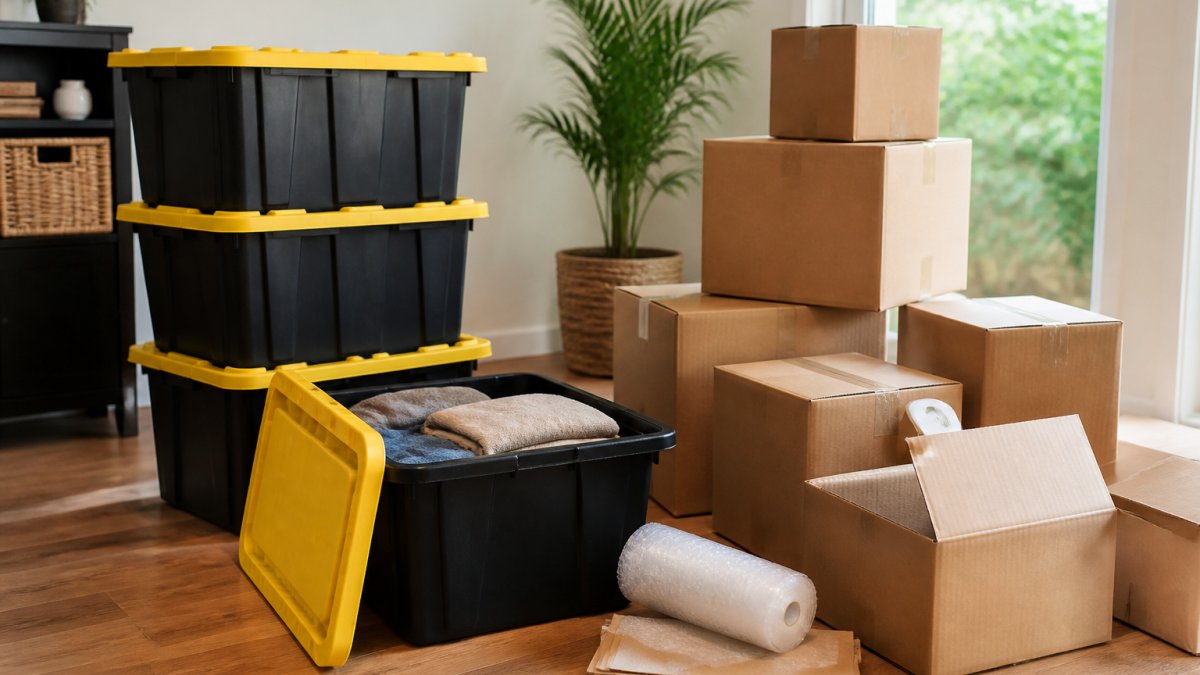
Moving boxes are cheaper upfront but disposable, while plastic totes cost more and can be reused across moves. Plastic totes win on durability, moisture protection, stackability, and handling, so they are worth it when you value protection and less waste over the lowest sticker price.
- Cardboard is cheap per box but disposable; plastic containers cost more upfront and are reused.
- Uniform plastic totes stack evenly, while mismatched cardboard boxes wobble and waste space.
- Line tote bottoms with a towel or packing paper, pack heavy items first, and label each tote by room.
- A full 27-gallon tote of books is a lifting hazard, so keep book containers small.
- QC Tote Rental delivers 27-gallon plastic totes to your door with pickup included and no tape or assembly.
Table of Contents
- Moving Boxes vs Plastic Totes: How the Two Compare
- Are Plastic Moving Boxes Worth It for Your Move?
- How to Pack Plastic Totes for Moving
- Best Containers for Moving: Matching the Option to the Room
- Moving Box Alternatives Beyond Cardboard and Totes
- Reserve Totes and Plan Your Move
- Frequently Asked Questions
Moving Boxes vs Plastic Totes: How the Two Compare
The choice between moving boxes vs plastic totes comes down to durability, cost, and how much handling your belongings will face. This guide from QC Tote Rental breaks down both options so you can pack with confidence. Cardboard wins on upfront price. Plastic wins on protection and reuse.
Here's the part most guides skip: the real cost difference isn't the container. It's the time, tape, and replacement boxes you buy mid-move when a bottom gives out.
Durability, Moisture Protection, and Stackability
Cardboard can dent, sag, and soak up moisture, and a rainy trip to the truck can compromise a load. Plastic is generally more resistant to water and crushing.
Stackability matters just as much. Uniform plastic totes stack evenly in a truck or storage unit, while mismatched cardboard boxes wobble and waste space. That load stability protects your fragile items and your back.
Cost, Reusability, and Handling
Cardboard is cheap per box but disposable. You buy it, tape it, break it down, and recycle it after one move. Plastic containers typically cost more upfront but can be reused across moves.
Handling separates them further. Totes have molded handles and rigid walls, so they're easier to carry and lift. Cardboard needs tape and careful packing to avoid blowouts. For heavy loads, a tote with real handles is simply safer.
| Factor | Cardboard Boxes | Plastic Totes |
|---|---|---|
| Upfront cost | Lower per box | Higher per container |
| Durability | Dents and crushes | Holds shape |
| Moisture protection | Poor | Strong |
| Reusability | One move, then recycle | Reused many times |
| Stackability | Uneven | Uniform and stable |
| Handling | Needs tape, can tear | Molded handles |
Are Plastic Moving Boxes Worth It for Your Move?
Plastic moving boxes are worth it when you value protection, speed, and less waste over the lowest sticker price. For most households, the answer is yes.
Renting totes means you don't have to buy containers you'll store or discard. QC Tote Rental totes require no tape or assembly. If you're weighing the trade-off, rent durable 27-gallon plastic moving boxes and totes delivered to your door and see how the package options fit your move. Wondering where to find them nearby? Our guide on where to rent moving totes covers local options.
Confirm your delivery and pickup dates before you book.
How to Pack Plastic Totes for Moving
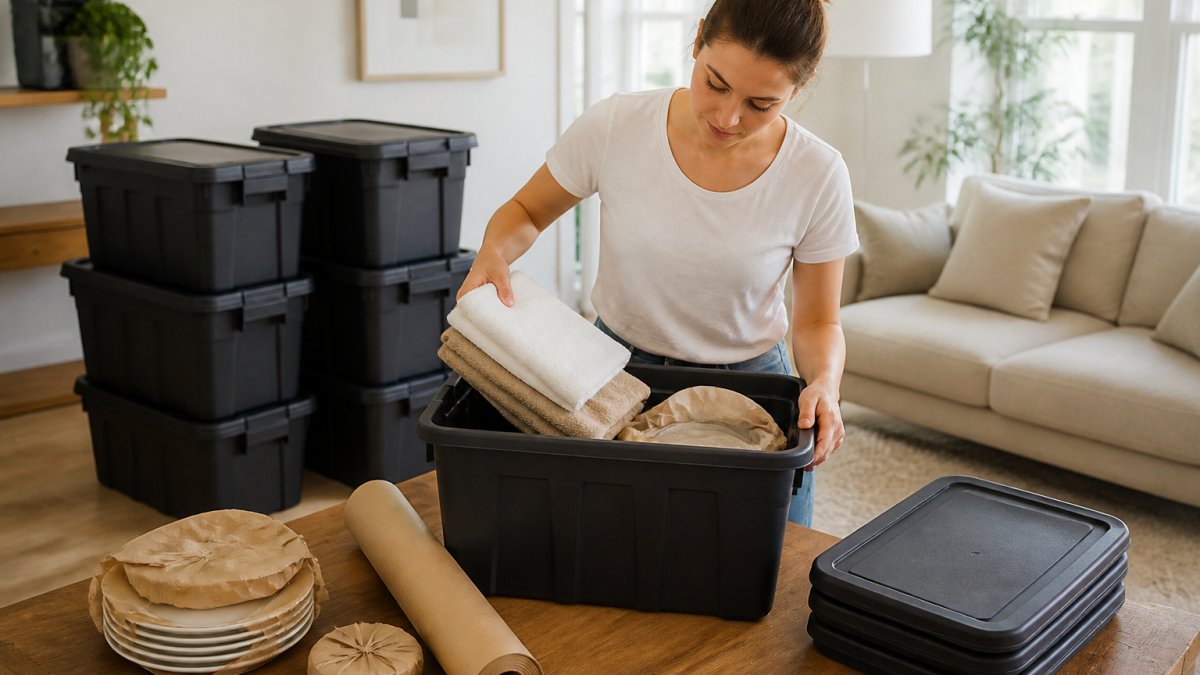
Packing totes well takes about the same effort as boxing, minus the tape. Follow these steps for a damage-free move:
- Line the bottom with a towel or packing paper for cushioning.
- Pack heavy items first and keep each tote under a comfortable lifting weight.
- Wrap fragile items individually and fill gaps so nothing shifts.
- Use the lid to seal, and label each tote by room.
- Stack lighter totes on top of heavier ones in the truck.
For delicate belongings, our guide on packing fragile items for a damage-free move goes deeper on wrapping technique. A common mistake is overfilling a tote until the lid won't close. That defeats the point of a rigid container.
Best Containers for Moving: Matching the Option to the Room
The best containers for moving depend on the room. Match the option to what you're packing.
Kitchen. Dishes and glassware are a high-risk load. Pack plates on edge, not flat, and wrap each piece. Wrap each piece, then fill gaps with towels or packing paper so nothing shifts. Keep each tote to a weight you can lift with both hands at waist height. Cardboard works for pantry dry goods and lightweight utensils, but it loses to totes for anything breakable or moisture-sensitive.
Bedrooms and closets. Soft goods, bedding, clothing, curtains, are the easiest load. Cardboard is fine here if the boxes stay dry. Use vacuum bags inside totes to cut volume, then label by room so unpacking is a straight line.
Books and documents. This is where weight beats material. A small, reinforced box or a half-full tote is the right call; a full 27-gallon tote of books is a lifting hazard. Keep book containers small and uniform so you can carry them one at a time without a hand truck. Documents that must stay dry belong in a sealed tote, not a cardboard box that can wick moisture from a garage floor.
Fragile items and electronics. Wrap fragile contents and fill gaps so nothing shifts. Use the original box for a TV or monitor if you have it, then pad around it inside a tote or a reinforced carton. Never stack a heavy tote on top of a fragile one.
Garage and tools. Sturdy containers are a practical choice for heavy tools and garden supplies. Tools, paint cans, and garden supplies belong in totes that seal, both for weight and for leaks. Cardboard in a garage is a moisture and pest risk, so skip it here.
Seasonal storage. Plastic totes that stack can be reused for seasonal storage between moves.
A hybrid plan works well: totes for the high-value, heavy, and moisture-sensitive rooms, cardboard for lightweight, low-risk items you'll toss after the move. The right split depends on how much fragile and heavy goods you own.
Moving Box Alternatives Beyond Cardboard and Totes
Beyond the two main options, a few moving box alternatives are worth knowing, such as reusable plastic crates, storage bins, and laundry baskets for smaller loads.
The trade-off is uniformity. Mixed containers don't stack well and slow down loading. That's why a single, consistent tote system tends to win on moving day.
Reserve Totes and Plan Your Move
Planning before packing day helps. Decide which rooms get totes, set your delivery date, and confirm pickup at your new place.
QC Tote Rental delivers durable 27-gallon plastic totes to your door, with pickup included. No cardboard, no tape, no box assembly. If you're moving in the Quad Cities or surrounding areas, reserve your moving totes and lock in your dates. Not sure your city is covered? Check our moving box and tote rental service area to confirm delivery and pickup near you.
Frequently Asked Questions
Is it better to use cardboard or plastic boxes for moving?
It depends on what you are packing and how long you need the containers. Cardboard moving boxes cost less upfront and work well for one-time moves and odd-shaped items. Plastic totes cost more to buy and can be reused for storage after the move.
Are plastic moving boxes worth it?
For many households, yes. Plastic totes eliminate the tape-and-assembly routine on moving day. Rental totes are picked up after the move. If you move often or need containers for a renovation, the convenience and protection usually outweigh the higher upfront cost of buying cardboard.
Which is easier to stack when moving, cardboard boxes or plastic totes?
Uniform containers are easier to stack than mixed sizes. Keep heavy containers at the bottom so the load stays stable.
Can you reuse plastic totes after a move?
Yes. Durable plastic totes can be reused for seasonal storage, garage organization, and future moves. Plastic totes can be reused for seasonal storage, garage organization, and future moves.
Choosing containers shouldn't add stress to an already busy move. QC Tote Rental makes it simple with durable 27-gallon totes, delivery and pickup included, and a uniform stackable design that protects your belongings. Get started with QC Tote Rental and pack your next move with less waste and less hassle.
