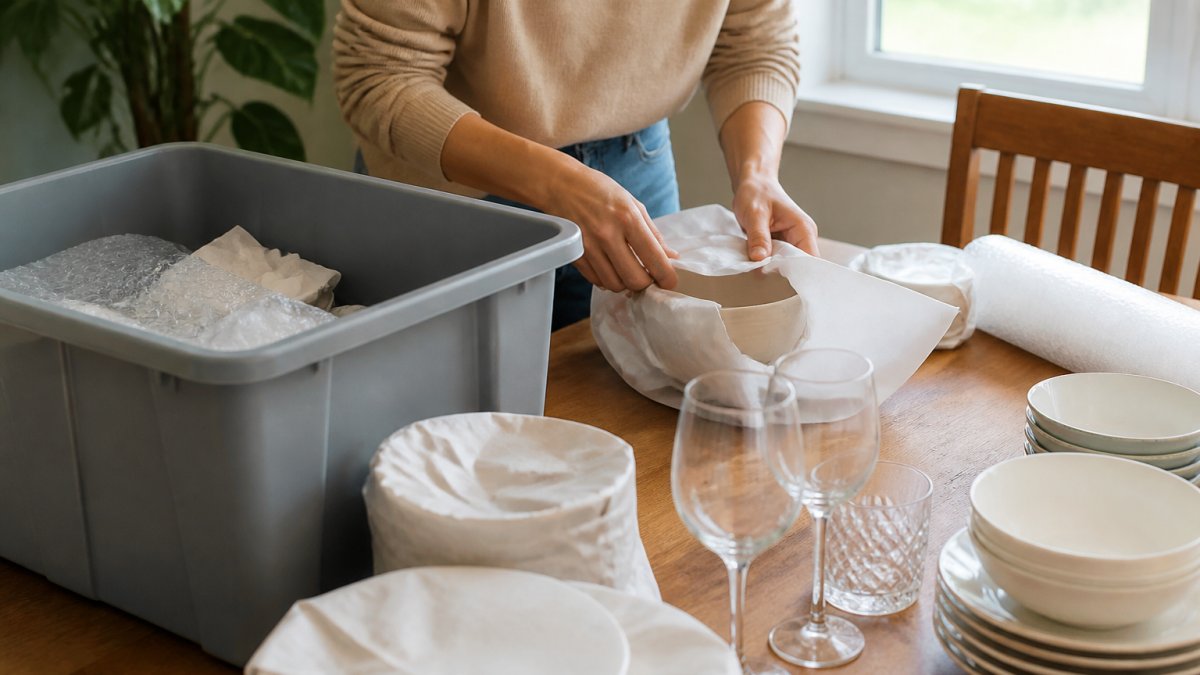
Last Updated: October 26, 2026
Quick Summary
To pack fragile items, wrap each piece individually in packing paper and bubble wrap, then cushion every side of a sturdy double-wall box with at least two inches of padding. Fill all gaps so nothing shifts, keep boxes light, and label them Fragile on the top and sides.
- Use sturdy double-wall boxes in small and medium sizes, and skip flimsy grocery-store boxes.
- Build a cushioned base of bubble wrap or packing paper at least two inches thick.
- Wrap each glass individually in packing paper, add bubble wrap, and never nest glasses inside each other.
- Stand plates on edge with a foam sheet between each plate instead of stacking them flat.
- Stop loading a glassware box when it reaches about 25 to 30 pounds.
Table of Contents
- Step 1: Gather the Best Packing Materials for Fragile Items
- Step 2: Build a Cushioned Base and Line the Box Sides
- Step 3: How to Pack Glassware for Moving Without Cracks
- Step 4: How to Pack Dishes for Moving So Plates Stay Whole
- Step 5: How to Pack Mirrors and Picture Frames Flat and Safe
- Step 6: Fill Empty Spaces and Test Whether the Box Is Packed Safely
- Pack Smarter, Not Harder
- Frequently Asked Questions
Step 1: Gather the Best Packing Materials for Fragile Items
To pack fragile items well, use sturdy double-wall boxes, bubble wrap, packing paper, foam sheets, and reinforced packing tape. Skip flimsy free grocery-store boxes, they crush under weight and leave breakables exposed.
Here is what you actually need:
- Sturdy boxes in small and medium sizes. Small boxes stay light and protect fragile items better than one heavy box.
- Bubble wrap for glassware, dishes, and anything with a curve.
- Packing paper for wrapping and for filling gaps.
Durable plastic totes are a smart swap for cardboard: they do not crush, stack evenly, and keep their shape when loaded. If you are moving in the Quad Cities area, choose the tote package that fits your move and have sturdy containers delivered to your door. You can also reserve your moving totes once you know how many you need, and check whether tote rental covers your city before you order.
Watch out: Do not use boxes that held groceries or produce. They are built for one trip and lose strength fast.
Here is what you actually need to pack fragile items well.
| Material | Best for |
|---|---|
| Sturdy boxes in small and medium sizes | Keeping fragile boxes light and protected |
| Bubble wrap | Glassware, dishes, and anything with a curve |
| Packing paper | Wrapping and filling gaps |
| Foam sheets | Flat items like mirrors and picture frames |
| Packing tape made for moving | Sealing boxes, not gift wrap |
| Permanent markers | Labeling every box Fragile |
| Durable plastic totes | A swap for cardboard that does not crush |
Step 2: Build a Cushioned Base and Line the Box Sides
A cushioned base is a layer of bubble wrap or packing paper at least two inches thick on the bottom of the box. It absorbs shock when the box is set down. Line the sides the same way so nothing touches bare cardboard.
Here is how to build a safe box:
- Add two inches of bubble wrap or crumpled packing paper to the bottom.
- Press it down so it stays flat.
- Line all four sides with foam sheets or paper.
- Leave the top open until the box is full.
This step takes two minutes and prevents most breakage by absorbing impact and stopping items from shifting.
Step 3: How to Pack Glassware for Moving Without Cracks
To pack glassware for moving, wrap each glass individually in packing paper, then add a layer of bubble wrap. Place glasses upright and never nest them inside each other.
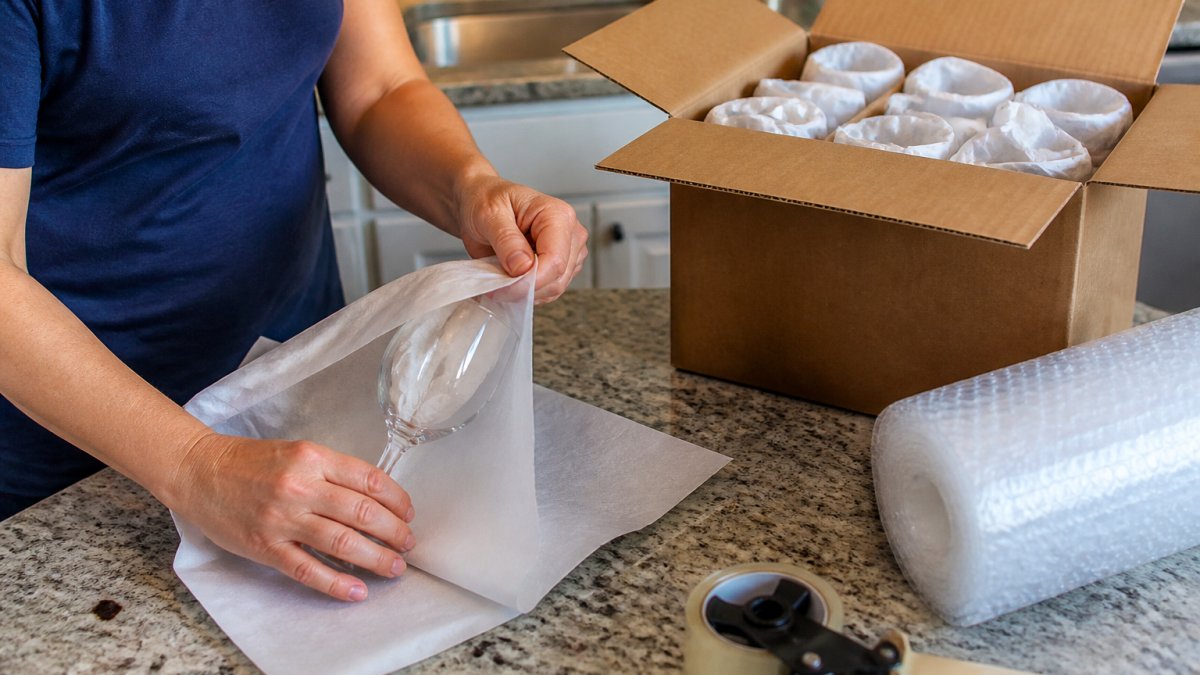
Most glassware breakage comes from three things: glass touching glass, an unsupported bowl, and a box loaded too heavy on one side. The wrapping order below addresses all three. Work through one type of glass at a time so you do not mix stemware and tumblers in the same layer.
Tumblers and everyday glasses
- Stuff the inside of each glass with crumpled packing paper. This keeps the walls from flexing inward when the box is stacked.
- Roll the glass in packing paper on a diagonal so the paper covers the rim and base.
- Tuck the ends in so the wrap stays tight and does not unravel.
- Add one layer of bubble wrap around the outside, bubble side facing the glass.
- Stand the glass upright in the box. Never place a glass upside down on its rim.
Wine glasses and stemware
Stemware is the most common kitchen-box casualty because the stem is a narrow stress point. Wrap the bowl and stem separately:
- Wrap the bowl in packing paper first, then a layer of bubble wrap.
- Wrap the stem and base in a separate piece of paper so the bowl and base can flex independently.
- Place the glass on its side or upright, with foam or crumpled paper packed around the bowl so it cannot rock.
- Do not stack stemware on top of tumblers. Give stemware its own layer or its own box.
Pitchers, vases, and handled glass
- Stuff the interior with paper, then wrap the handle with a strip of bubble wrap before wrapping the body.
- Pack pitchers and vases upright with paper packed around the base so they cannot tip.
- Keep handles facing the center of the box, not the wall, so they are not the first thing to hit if the box is set down hard.
Loading the glassware box
- Put the heaviest, largest pieces on the bottom and the smallest on top.
- Keep a finger-width gap between wrapped pieces and fill it with crumpled paper.
- Stop loading when the box reaches about 25 to 30 pounds. A glassware box that is hard to lift is a box that will be dropped.
Label the box "Fragile" on the top and at least two sides, and write "Glassware" so handlers know what is inside. Load glassware boxes last so they ride on top, not under furniture.
Step 4: How to Pack Dishes for Moving So Plates Stay Whole
To pack dishes for moving, place a paper plate or foam sheet between every plate, then stack them on edge, not flat. Plates packed flat crack under their own weight. Standing them on edge spreads the pressure and keeps them whole.
Here is the plate method:
- Wrap each plate in packing paper.
- Slide a foam sheet between plates.
- Stand plates on edge in a tight row.
- Fill gaps with crumpled paper.
- Put a layer of cushioning on top.
Bowls stack well when you nest them with paper between each one. Wrap cups and mugs like glassware, and stuff paper inside them.
Step 5: How to Pack Mirrors and Picture Frames Flat and Safe
To pack mirrors and picture frames, tape an X across the glass, wrap the frame in foam, then place it flat in a close-fitting box. Never pack frames standing up, flat packing spreads weight evenly and stops the glass from flexing.
Framed art and mirrors fail in two ways: the glass flexes and cracks, or a corner takes an impact and the frame splits. The sequence below protects both the face and the corners, ending with a check before the box is sealed.
Step-by-step for frames and small mirrors
- Tape an X across the glass with painter's tape. The tape does not strengthen the glass; it holds the pieces together if it breaks, so nothing cuts through the box.
- Add foam corner protectors to all four corners. Cardboard corner pockets work if you do not have foam.
- Wrap the whole frame in a layer of foam sheet or two layers of bubble wrap, bubble side facing the frame.
- Choose a box close to the frame's size. A box that is too large lets the frame slide, and sliding is what cracks glass.
- Place the frame flat in the box, face up.
- Fill every gap around the edges with crumpled packing paper so the frame cannot shift.
- Add two inches of cushioning on top before closing the lid.
- Label the box "Fragile: Glass" and write "This Side Up" on the top.
Large mirrors and oversized art
- Use a mirror box or a double-wall box sized to the mirror. Do not fold a standard box around a mirror; the crease becomes a weak point.
- Build a cardboard sandwich: one sheet of cardboard against the glass face, one against the back, taped together at the edges.
- Stand the boxed mirror upright in the truck, against a wall or the side of the truck, never flat under other boxes. A flat mirror box stacked under weight will crack even with good cushioning.
Testing the box before you seal it
Run this check on every frame and mirror box:
- Gently rock the box side to side. The frame should not slide or knock against the walls.
- Press the center of the top. It should feel firm, not spongy.
- Lift one end a few inches and set it down. Listen for a rattle or a glass-on-cardboard tap.
If the box fails any check, open it and add cushioning before sealing. It is faster to repack a box than to replace a mirror.
Step 6: Fill Empty Spaces and Test Whether the Box Is Packed Safely
A box is packed safely when nothing moves inside it. Fill every gap with crumpled packing paper, foam, or air pillows, close the lid, and give the box a gentle shake.
Run this quick test before you tape the box:
- Shake the box gently. No movement means it passes.
- Press the top. It should feel firm, not spongy.
- Check the weight. If it is hard to lift, split it into two boxes.
Watch out: Overpacking is as risky as underpacking. A box that bulges will split at the seams.
Reusable cushioning works well here. Crumpled paper, air pillows, and old towels all absorb shock and can be used again.
Pack Smarter, Not Harder
Packing fragile items comes down to three habits: wrap each item on its own, cushion every side, and fill every gap. Do those three things and your breakables arrive intact.
QC Tote Rental makes the packing side easier. Our durable 27-gallon plastic totes need no tape or assembly, stack evenly in the truck, and we deliver and pick them up.
Frequently Asked Questions
Should fragile items be packed upright or flat?
It depends on the item. Plates, mirrors, and picture frames should travel upright, on their edges, because stacking them flat puts the weight of the stack on the glass. Glasses and stemware also go upright so pressure stays off the rim. Small knickknacks and jewelry can lie flat once each piece is wrapped and cushioned. Whatever the orientation, the box should be filled to the top so nothing shifts when it is lifted.
How much padding should you put around fragile items?
Use at least 2 inches of cushioning on the bottom, sides, and top of the box, and wrap each item so it cannot touch another item or the box wall. A good test is to close the lid and shake the box gently: if you hear or feel movement, add more packing paper or air pillows. Generous cushioning is cheaper than replacing a broken dish or mirror, and it is the single biggest factor in preventing breakage during a move.
What is the best way to pack delicate items that are not boxed?
Wrap each piece individually in packing paper first, then add a layer of bubble wrap or foam around the wrapped item. For spindly objects like figurines or lamp bases, use air pillows or foam sheets to fill the gaps around the shape. Place the wrapped item in a sturdy box with a cushioned base, and fill every empty space so it cannot move. Label the box fragile on the top and sides, and keep it out of the bottom layer of the moving truck.
How do you pack dishes and glassware so they do not break?
Wrap every plate, bowl, and glass separately in packing paper, then stack plates on edge rather than flat. Put a layer of cushioning between each piece, line the box with bubble wrap or foam, and fill the top with crumpled paper so the lid closes with slight pressure. Glasses go upright with paper inside the bowl and around the stem. Keep the finished box under 30 pounds so it is easy to carry and less likely to be dropped.
