Quick Summary
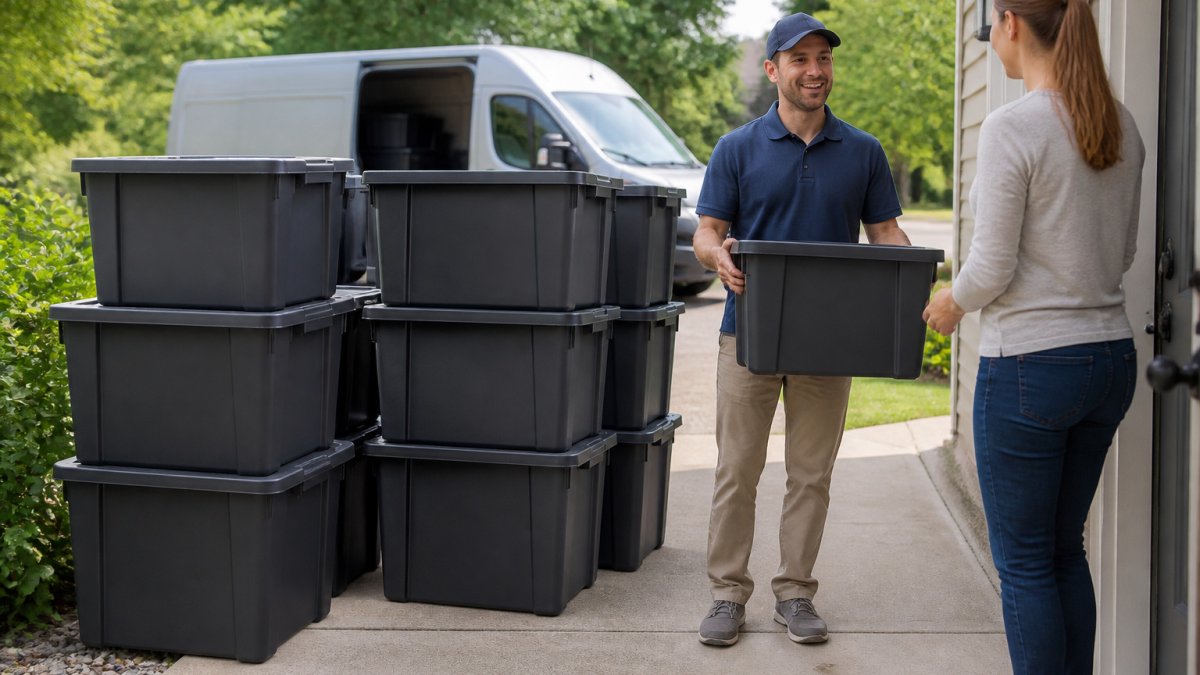
Plastic moving boxes are reusable 27-gallon totes you rent, fill for your move, and return after unpacking. They arrive ready to fill, so you skip the cardboard, tape, and box assembly that usually take an evening before a move.
- Each 27-gallon tote is uniform in size and stacks neatly with the others.
- Totes close without tape, so there is no box assembly before packing.
- Estimate totes room by room, then add a 10-15% buffer for last-minute items.
- Kitchens usually need the most totes, typically 6 to 10.
- Confirm lead time, delivery window, and placement before you book.
Table of Contents
- How Reusable Plastic Moving Boxes Work
- How Many Moving Boxes Do I Need?
- Delivery and Pickup for Moving Box Rentals
- Plastic Moving Boxes vs. Cardboard Boxes
- How Long Can You Keep Moving Totes?
- What to Compare When Choosing a Moving Tote Rental Service
- Reserving Your Plastic Moving Boxes for Your Move
- Frequently Asked Questions
How Reusable Plastic Moving Boxes Work
Reusable plastic moving boxes are sturdy totes you rent, use for your move, and return after you unpack. At QC Tote Rental, we provide 27-gallon plastic moving totes that arrive ready to fill, so you skip the cardboard, tape, and box assembly that usually eat up an evening before a move.
Each tote is uniform in size and stacks neatly with the others. That makes loading a truck and organizing a room more predictable than working with a mix of cardboard sizes. The totes close without tape.
Plastic is sturdy enough to handle repeated loading and stacking.
How Many Moving Boxes Do I Need?
Most people underestimate their moving box count by a room or two. A simple planning method beats guessing, and it works whether you rent reusable plastic moving boxes or buy cardboard.
Start with a room-by-room inventory, then convert it to totes using capacity rather than box count. QC Tote Rental's moving totes are 27 gallons each. As a practical rule of thumb:
- Bedroom: 3-5 totes for clothing, linens, and personal items; add 1-2 for shoes and seasonal goods.
- Kitchen: 6-10 totes. Dishes, cookware, and pantry items are dense and awkward, so this room usually needs the most containers.
- Living room: 4-6 totes for books, media, decor, and small electronics.
- Bathroom: 1-2 totes for toiletries, towels, and cabinet contents.
- Home office: 2-4 totes for files, supplies, and desk items.
- Garage, basement, or storage closet: 3-8 totes. These spaces hide more than people expect.
Add 10-15% as a buffer for last-minute items, cleaning supplies, and anything you pack on moving day. Extra totes are easier to return than a shortage is to solve when the truck is already loaded.
Two practical checks before you finalize a count:
- Weight check. A 27-gallon tote filled with books or tools can get heavy fast. Plan to spread dense items across more totes and keep each one liftable by one person.
- Space check. Stacked totes take up floor space while you pack. Measure a corner or wall where you plan to stage them so you are not tripping over containers for a week.
If you are between counts, size up rather than down. A room-by-room list plus a small buffer is the most reliable way to avoid a mid-move supply run.
U.S. Department of Transportation moving resources
The article breaks down a rough tote count by room, so you can estimate how many 27-gallon totes each space needs.
| Room | Suggested totes | What it usually holds |
|---|---|---|
| Bedroom | 3-5, plus 1-2 | Clothing, linens, shoes, seasonal goods |
| Kitchen | 6-10 | Dishes, cookware, pantry items |
| Living room | 4-6 | Books, media, decor, small electronics |
| Bathroom | 1-2 | Toiletries, towels, cabinet contents |
| Home office | 2-4 | Files, supplies, desk items |
| Garage, basement, or storage closet | 3-8 | Items that hide more than expected |
Delivery and Pickup for Moving Box Rentals
Delivery and pickup are the parts of a moving box rental that most affect your schedule, so plan them before you book. The goal is simple: totes arrive before you start packing, and empty totes leave after you unload.
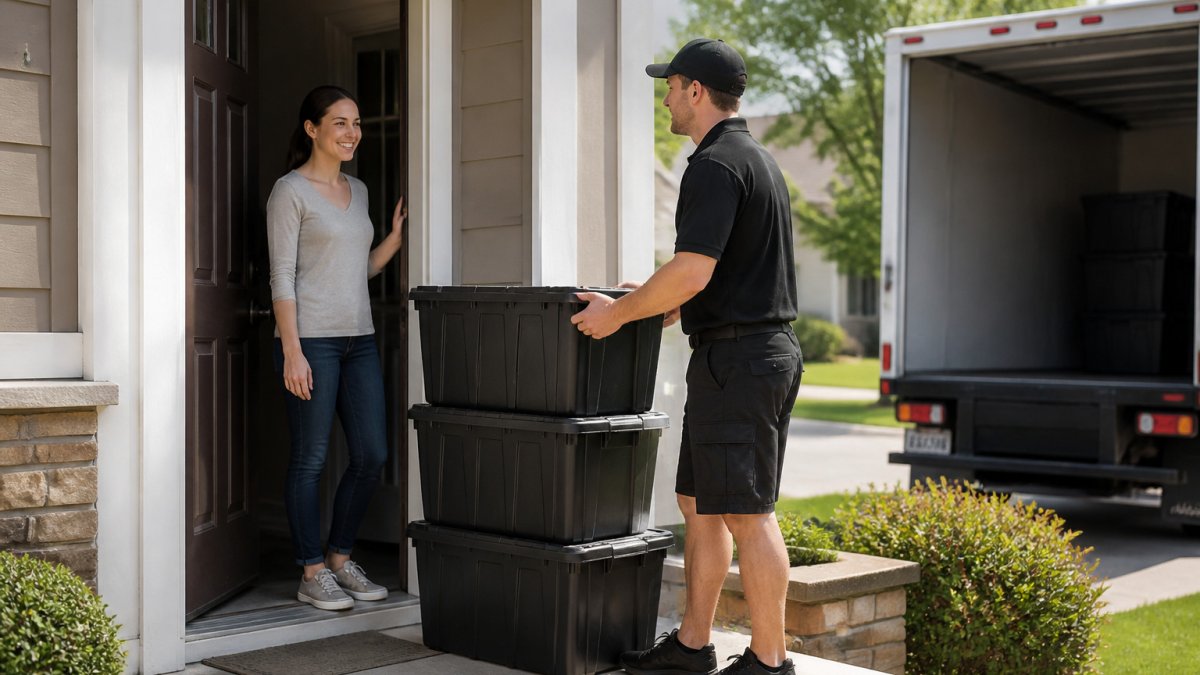
Before you book, confirm:
- Lead time. Ask how far in advance to reserve, especially for weekend and end-of-month moves when availability tightens.
- Delivery window. Get a window, not just a day, so someone is home or a drop location is agreed on.
- Placement. Decide where totes should be left at both addresses, garage, front porch, lobby, or inside a unit. Clear access and a level spot make drop-off and pickup faster.
- Access requirements. Note stairs, elevators, gated entries, parking restrictions, or long carries. These details affect scheduling and should be shared when you reserve.
If your move date changes, contact the provider as soon as you know. Rescheduling delivery or pickup is usually easier with notice than on the day of, and it protects availability for the dates you actually need.
At pickup, stack empty totes in the agreed location and confirm the count. A quick count against your original order avoids confusion and makes the end of the rental clean.
QC Tote Rental delivers and picks up throughout the Quad Cities and nearby communities, including Davenport, Bettendorf, LeClaire, Moline, Rock Island, East Moline, Silvis, Milan, Geneseo, and surrounding areas. If you are unsure whether your address is covered, check the service area details before you reserve.
For questions about delivery, pickup, and scheduling, see the QC Tote Rental Moving Boxes page.
Plastic Moving Boxes vs. Cardboard Boxes
Cardboard boxes are familiar and easy to find, which is why many people default to them. The tradeoff is assembly time, tape, and disposal. Each cardboard box must be built, sealed, and eventually broken down and carried away, and boxes that get wet or crushed often fail partway through a move.
Plastic totes reduce that workload. They arrive ready to use, close without tape, and stack securely. Cardboard can still be a fine choice for a small, one-time move with few items, so match the option to the size of your job.
How Long Can You Keep Moving Totes?
If your timeline changes, contact us before the scheduled pickup to discuss your options. Keeping totes longer than planned may affect availability and scheduling, so it is best to raise changes early.
What to Compare When Choosing a Moving Tote Rental Service
When you compare providers, look beyond the headline offer and check the details that affect your move. Confirm the tote size, how many totes are included, and whether delivery and pickup are both part of the service.
Ask about the rental period and how scheduling works. Clear answers to these questions make it easier to plan. Pricing depends on quantity, dates, and delivery, so check the QC Tote Rental pricing page or request a quote for your move.
Finally, confirm that the provider serves your address. Service coverage varies, and it is better to know before you commit.
Reserving Your Plastic Moving Boxes for Your Move
Once you know how many totes you need and when you are moving, reserve early. Availability can tighten during peak moving months, especially on weekends and at the start and end of the month.
Have your current and new addresses ready, along with your preferred delivery and pickup dates. Reserve your moving totes through QC Tote Rental before your move date. Booking ahead gives you a clear plan and a smoother move from start to finish.
Frequently Asked Questions
Can you rent plastic moving boxes for a move?
Yes. Rental providers deliver reusable plastic moving totes to your home, you pack and load them, and the provider picks up the empty totes after the move. Because the totes are reused, you do not need to assemble, tape, or haul away cardboard. Rental terms, quantities, and pricing vary by provider and depend on how many totes you order, the rental dates, and whether delivery and pickup are included. For current pricing and availability, check the QC Tote Rental website or request a quote before you book.
How does delivery and pickup work for moving box rentals?
You schedule a delivery date before your move, and the totes arrive at your home ready to use. Once you have unloaded at your new home, you can schedule pickup of the empty totes from that location. Confirm the delivery window, pickup timing, and any service-area limits when you book, since these details differ between providers. Having a clear empty space at the pickup point helps the crew collect everything in one visit.
Are reusable plastic moving boxes better than cardboard boxes?
Plastic moving totes have advantages over cardboard: they need no assembly, no tape, and no disposal, and their uniform size makes them easy to stack in a truck or storage unit. Cardboard boxes are a single-use option that you can usually buy in small quantities without a rental agreement. Which works better depends on your move. If you value convenience and want to avoid breaking down boxes afterward, plastic totes are often the better fit.
How many moving totes do I need for my home?
Count the rooms you are packing and estimate how many containers each room will take. A one-bedroom apartment often needs a modest number of totes, while a larger house with a garage and storage space needs considerably more. Plan separate totes for heavy items such as books and tools, and keep lighter items like linens in other containers. Ordering a few extra totes is usually easier than running short on moving day, and you can confirm quantities with the provider when you book.
